
Our skin reveals more about us than we often realize. Hormonal changes can affect how we look, how we feel, and how our skin behaves. Consider periods of stress, menstruation, pregnancy, or menopause: times when hormones fluctuate and your skin can sometimes become unbalanced.
You may experience blemishes, dry skin, or increased oil production. Some women even experience a duller complexion or age spots. Fortunately, there are gentle, natural ways to support your skin through these phases. One of them is red light therapy: a calming and effective way to help restore hormonal balance from within.
What is the link between hormones and your skin?
Hormones are your body's messengers. They regulate not only your mood and energy levels, but also your skin condition. Estrogen and progesterone, for example, play a major role in the firmness, hydration, and elasticity of your skin.
During your cycle or menopause, these hormones can fluctuate greatly. This slows down collagen production, weakens the skin barrier, and increases sebum production. The result? Skin that is more easily thrown out of balance, becomes more sensitive, and looks less even.
Red light therapy helps to restore that balance in a natural way. The red light penetrates deep into the skin layers and activates the cells responsible for repair and renewal.
How red light therapy affects hormonal balance
The power of red light lies in cell activation. It stimulates the mitochondria, the powerhouses of your cells, leading to better functioning skin cells. This indirectly has a positive effect on hormonal processes that influence your skin.
In addition, red light promotes blood circulation, which leads to faster delivery of nutrients and better removal of waste products. This helps to reduce inflammation, make pimples disappear faster, and calm the skin.
For women experiencing menopause or hormonal acne, red light therapy can help keep the skin calm and stimulate collagen production. This helps maintain firmness and elasticity, even during periods of hormonal changes.
Red light as a resting point during hormonal fluctuations
Besides its physical effects, red light therapy also has a calming, almost meditative aspect. Many women find the warmth of the light soothing. This is important, because stress is one of the biggest triggers for hormonal imbalance.
By regularly taking a red light therapy session, you create a fixed moment of rest. During that fifteen minutes, you slow down, breathe more deeply, and give your body the chance to release tension. This relaxation also helps your hormones to come back into balance.
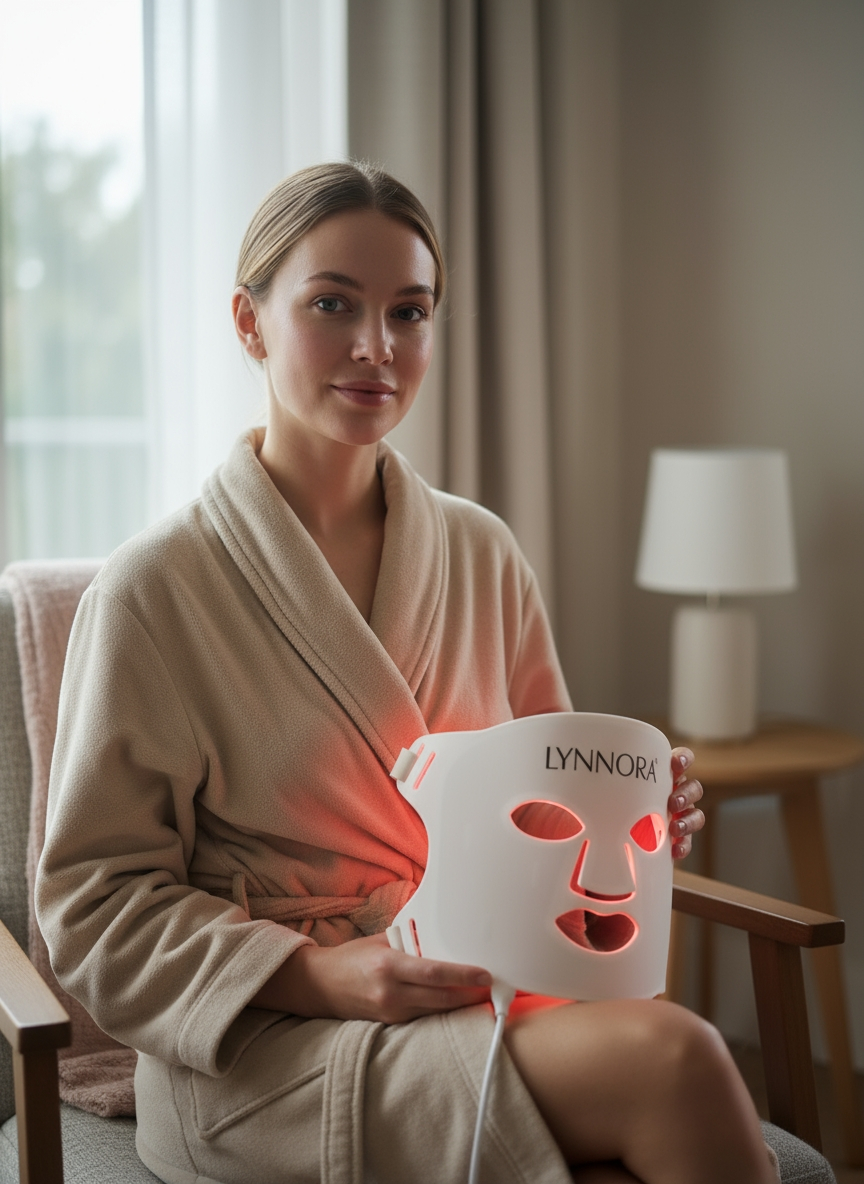
Make it a ritual. Turn off your phone, choose some soothing music, and use your Lynnora Red Light Therapy Face Mask. three to five times a week, ten to fifteen minutes per session.
Don't forget your neck and décolleté with the Red Light Therapy Neck & Décolleté Mask. This way, you're not only giving your face, but your entire upper body the care it deserves.
The benefits of red light therapy for hormonal changes
-
Improved blood circulation
Red light promotes circulation, which helps bring oxygen and nutrients to the skin. This makes your complexion fresher and more vibrant. -
Stimulation of collagen
During menopause, collagen production decreases, which can lead to sagging skin. Red light therapy helps to slow down that process and maintain firmness. -
Fewer impurities
Due to its anti-inflammatory effect, hormonal pimples can disappear faster. The skin becomes calmer and more balanced. -
Restoration of elasticity
The combination of improved cell renewal and collagen stimulation results in smoother, more resilient skin. -
Mental relaxation
The soft red light stimulates the release of endorphins, which helps to reduce stress and tension.
Nourish your skin and hormones from the inside out.
To enhance the effect of red light therapy, it's important to support your body from the inside out. Hormones are sensitive to diet, sleep, and stress.
- Eat a balanced diet : Choose foods rich in healthy fats, such as avocado and salmon. These help with the production of estrogen.
- Avoid sugar spikes : Fluctuations in blood sugar affect your hormones and can worsen blemishes.
- Get enough sleep : Your skin repairs itself and hormones are regulated during sleep.
- Exercise regularly : Physical activity helps to release stress hormones.
- Drink plenty of water : Hydration is crucial for both skin and hormonal balance.
By combining these habits with your red light therapy sessions, you naturally support both your skin and hormones.
Want to know how red light therapy helps with stress and fatigue? Then read our blog about red light therapy for stress and burnout. .
Routine for hormonal balance
To maximize the benefits of your red light therapy, you can combine the treatment with gentle skincare. After your session, use a hydrating serum or an oil with natural ingredients such as jojoba or rosehip.
During periods when your skin is more sensitive, such as around your menstruation, it's best to avoid products with acids. Instead, opt for soothing formulas.
👉 Read our blog about the best skincare for red light therapy for product advice and combination tips.
Conclusion: balance starts with yourself.
Red light therapy is more than just a beauty treatment. It's a ritual of rest, recovery, and self-care. Regular use of red light gives your skin and hormones the chance to relax.
Whether you're dealing with hormonal acne, menopause, or stress, this gentle light treatment helps your skin recover and creates a natural glow that comes from within.
Invest in yourself with the Lynnora Red Light Therapy Face Mask. and experience how small moments of calm can bring about big changes.























